
Introduction
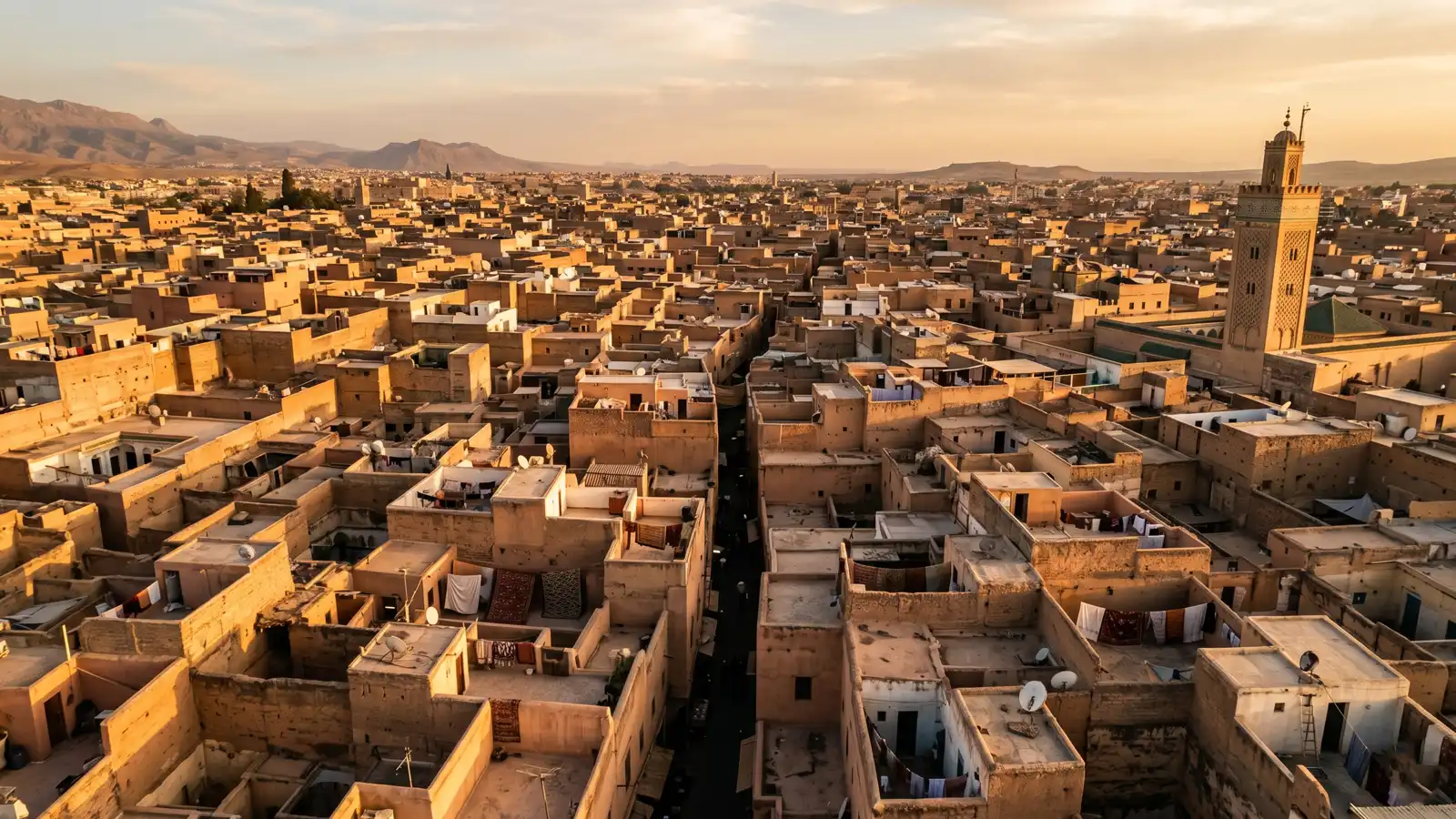
Morocco is a large country, and most travelers have less time than they think. Choosing the best places to visit in Morocco before you commit to an itinerary saves you from a common mistake: trying to cross too much of the country in too few days. Two weeks sounds generous until you realize that driving from Tangier in the north to the Sahara in the southeast takes the better part of two days each way. This guide covers Morocco's most visited cities and regions — what makes each one worth your time, how many days each generally needs, and who tends to get the most out of each place. It's not an exhaustive list of every town in the country. It's a starting point for deciding where you actually want to go.
Marrakesh
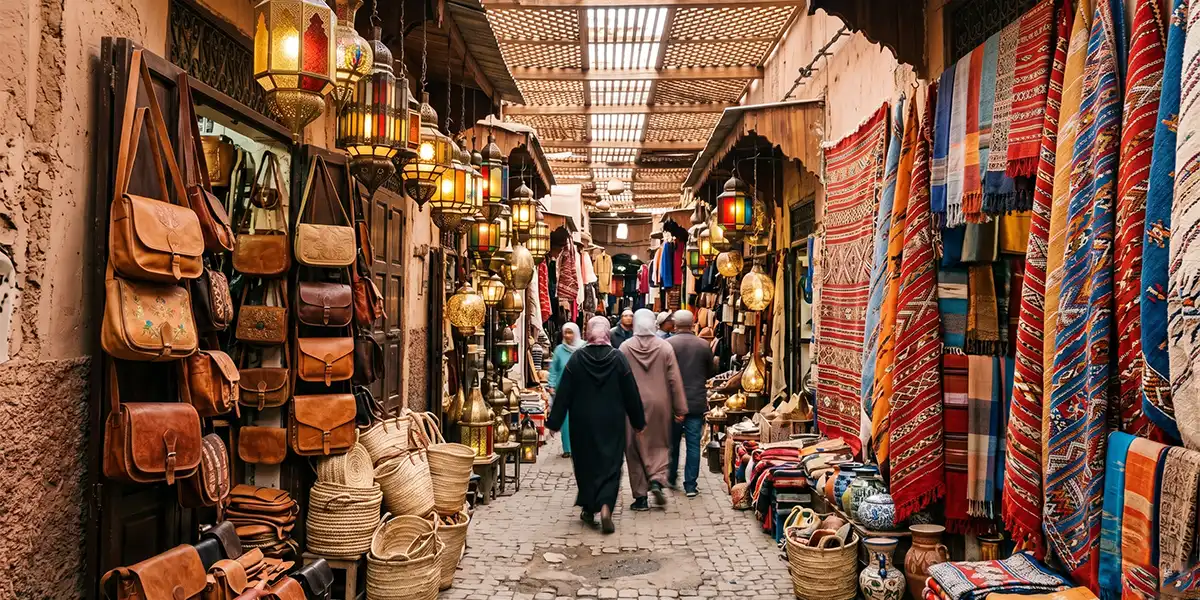
Marrakesh is where most Morocco trips begin, and for good reason. It has the best international flight connections, the widest range of accommodations at every price point, and a density of things to do that few Moroccan cities match. The medina is the main draw. Jemaa el-Fna square, the souks behind it, the Bahia Palace, the Koutoubia Mosque, and the Majorelle Garden all sit within reach of each other. Two to three days covers the highlights without rushing. Travelers who linger a fourth day usually find it worthwhile, especially if they add a day trip to the Atlas Mountains or the Ourika Valley. Marrakesh is also Morocco's most tourist-heavy city. The souks get crowded, prices in the medina are negotiated rather than fixed, and some streets near Jemaa el-Fna are explicitly designed for foot traffic and vendor attention. None of that is a dealbreaker, but it helps to know before you arrive. Best for: First-time visitors, short trips, travelers who want everything within walking distance. How many days: 2–3 nights minimum. 4 if you want a day trip.
Fez
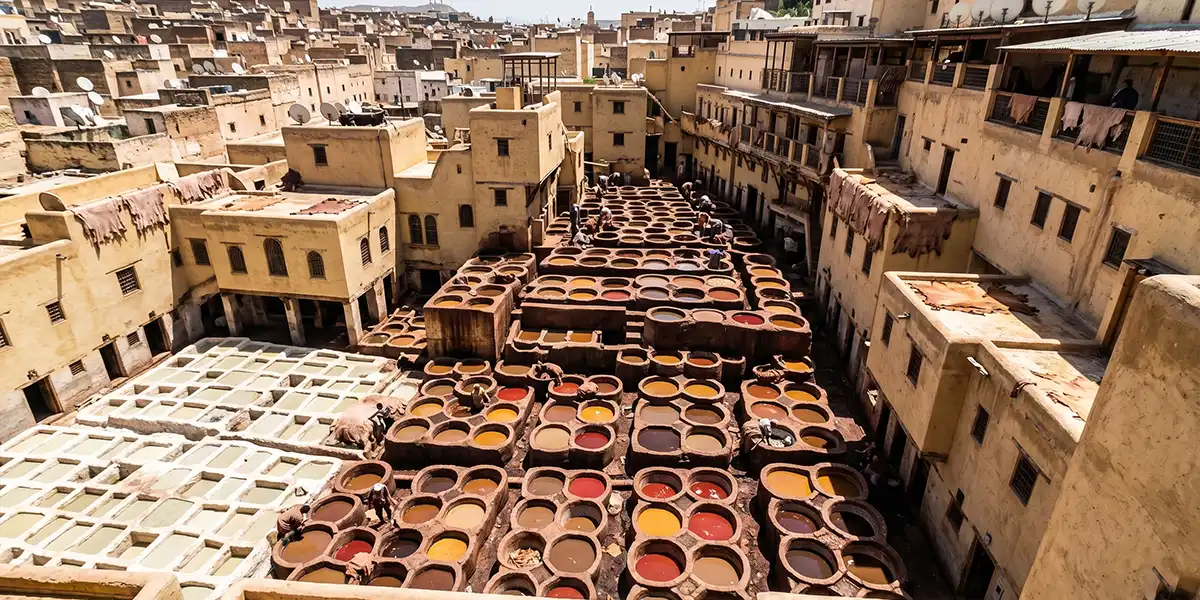
Fez rewards travelers who slow down. The medina — Fez el-Bali — is a UNESCO World Heritage Site and one of the largest car-free urban areas in the world. It's not organized for tourists in the way that Marrakesh is. Streets don't follow a grid, the tanneries are harder to find than maps suggest, and getting lost is basically part of the experience. That's the point. Fez is a living city, not a museum. Craft workshops, madrasas, mosques, and neighborhood markets overlap in ways that are harder to find elsewhere in Morocco. The Al-Qarawiyyin mosque and university, founded in 859 CE, is one of the oldest continuously operating educational institutions in the world. Two full days is the minimum. Three is better. Travelers who try to combine Fez with Marrakesh in a single short trip usually feel they shortchanged one or the other. Best for: Culture, history, architecture, travelers who want more depth than pace. How many days: 2–3 nights.
Chefchaouen
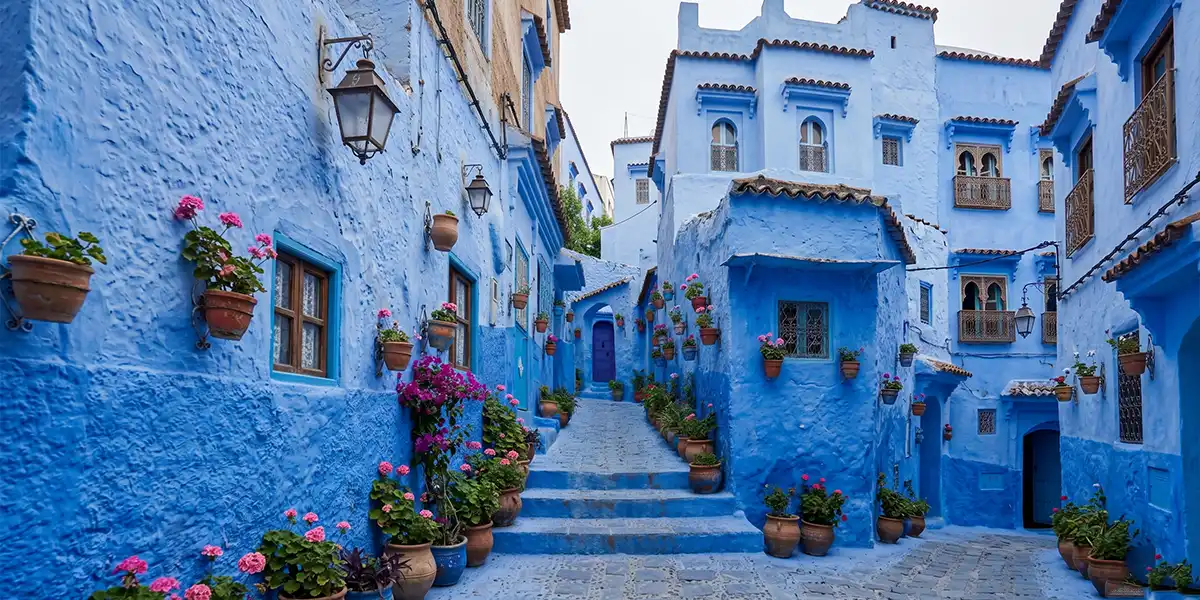
Chefchaouen sits in the Rif Mountains, about three hours from Fez and four from Tangier. The old medina is blue — or more accurately, varying shades of indigo, cobalt, and pale sky — and it's one of the most photographed places in the entire country. It's worth visiting, but it's worth knowing what it is. Chefchaouen is a small mountain town, not a large city. The medina can be walked end to end in twenty minutes. One full day covers most of what there is to see. Two nights is comfortable for travelers who want to hike in the surrounding hills or simply sit at a café and do nothing. Most visitors pass through Chefchaouen as part of a northern Morocco route that includes Tangier, Tetouan, and Fez. It works well as a two-night stop rather than a primary destination. Best for: Photography, a slower pace, hikers, travelers doing a northern Morocco loop. How many days: 1–2 nights.
Casablanca
Casablanca is Morocco's largest city and its economic center. It's not a typical tourist destination in the way that Marrakesh or Fez are. The medina is smaller and less preserved than those in other imperial cities. The city's character is modern, commercial, and coastal. What Casablanca does have: the Hassan II Mosque, which is one of the largest mosques in the world and one of the few in Morocco open to non-Muslim visitors, a good restaurant scene, and a coastal corniche worth walking. Travelers who fly into or out of Mohammed V Airport often spend a night in Casablanca at the start or end of a trip. Spending two days here is possible and enjoyable for the right traveler. Trying to make Casablanca the centerpiece of a Morocco trip usually disappoints. Best for: Stopover nights, business travelers, architecture, seafood. How many days: 1–2 nights, usually as part of a transit stop.
Rabat
Morocco's capital is the country's most underrated city for foreign visitors. Rabat has a working medina, a kasbah overlooking the Atlantic coast, the Hassan Tower, and the Mausoleum of Mohammed V — all without the tourist density of Marrakesh or Fez. It's cleaner and calmer than most Moroccan cities of similar size. The corniche along the ocean is well-maintained. The city has a French colonial-era ville nouvelle that gives it a different architectural character than the imperial cities further inland. Most visitors skip Rabat entirely. Those who do stop usually wish they had stayed longer. One to two nights is enough to see the main sites. It works well as a half-day stop between Casablanca and Chefchaouen, or as a full stop on a coastal route. Best for: Travelers who've done Marrakesh and Fez before, anyone who prefers a less commercialized experience. How many days: 1–2 nights.
Essaouira
Essaouira is a walled coastal city on the Atlantic, about three hours west of Marrakesh. The medina is UNESCO-listed, the ramparts face the ocean directly, and the wind that comes off the water is strong enough to make it one of the top kite-surfing and windsurfing spots in Africa. It runs at a different pace than Marrakesh. The souks are less aggressive, the streets are wider, and the city has a long-standing connection to musicians and artists that gives it a creative reputation. Jimi Hendrix allegedly visited in the late 1960s, and while the story is sometimes overstated, the city's bohemian character has real roots. Two nights is comfortable. Three gives you time for a day on the beach or a side trip to nearby argan cooperatives. Essaouira works particularly well as the first or last stop on a Marrakesh-based trip. Best for: Beach and ocean lovers, windsurfers, travelers who want a lower-key alternative to Marrakesh. How many days: 2–3 nights.
The Sahara Desert (Erg Chebbi and Erg Chigaga)
The Sahara is not a quick detour from any Moroccan city. Most travelers reach the dunes as part of a multi-day route through the High Atlas, Ouarzazate, and the desert towns near Merzouga (for Erg Chebbi) or M'Hamid (for Erg Chigaga).
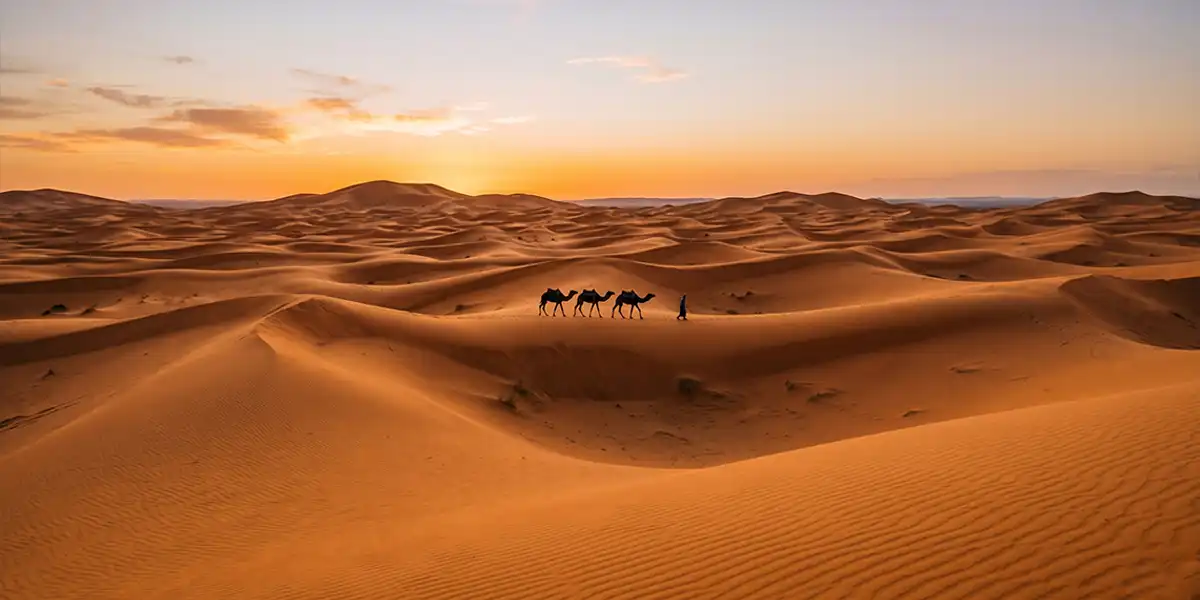
From Marrakesh, reaching Erg Chebbi takes a full day of driving — around eight to nine hours, sometimes more depending on the route and stops. Most travelers do it over two days, stopping in Ouarzazate or Aït Benhaddou along the way. The one-night desert camp experience, including a camel ride at sunset and sleeping in a fixed tent camp under the stars, is the standard approach for first-time visitors.
Erg Chebbi, near Merzouga, is the more accessible and more popular option. Erg Chigaga, near M'Hamid, is larger, quieter, and usually requires a 4x4 or organized tour to reach. Both are worth considering depending on your priorities.
Best for: Any traveler doing more than five days in Morocco. The Sahara is worth the journey.
How many days: 2 nights minimum to justify the travel time. One night at the desert camp is the usual structure.
Tangier
Tangier has spent decades shedding its reputation as a city travelers pass through rather than stay in. It's changed considerably since the 1990s. The port area has been redeveloped, the medina has been partially renovated, and the city has drawn renewed interest from travelers doing northern Morocco itineraries. It's still a city in transition, and some parts feel unfinished. But the Kasbah has genuine character, the views over the Strait of Gibraltar are worth the walk, and the Café Hafa — terraced down a cliffside overlooking the Atlantic — has been serving mint tea since 1921. Tangier works best as an entry or exit point for travelers crossing to or from Spain by ferry, or as the start of a northern Morocco route through Chefchaouen and Fez. Best for: Travelers arriving from Spain, northern Morocco routes, history of the Beat Generation literary scene. How many days: 1–2 nights.
Agadir
Agadir is Morocco's main beach resort city. It was largely rebuilt after a 1960 earthquake destroyed most of the original city, so it lacks the historic medina and old-city architecture that other Moroccan destinations are known for. What it has: a long sandy beach, reliable sunshine for most of the year, a well-developed tourist infrastructure, and direct charter flights from much of Europe. It's a different kind of Morocco trip — closer to a traditional beach holiday than an immersive cultural experience. Travelers looking for a relaxed coastal base from which to take day trips to Taroudant, the Souss-Massa National Park, or the Anti-Atlas mountains will find Agadir practical for that purpose. Best for: Beach travelers, families, European visitors on short trips, those combining sun and sightseeing. How many days: 3–5 nights for a beach stay. 1–2 nights as a route stop.
Ouarzazate
Ouarzazate sits at the edge of the Sahara, south of the High Atlas. It's the starting point for most Sahara routes and home to the Aït Benhaddou ksar — a UNESCO-listed fortified village that has appeared in films from Gladiator to Game of Thrones. The town itself is smaller and quieter than most travelers expect. The Atlas Film Studios, one of the largest film production facilities in the world, is nearby and open for tours. Ouarzazate is rarely the main destination, but it earns its place as a two-night stop on any Marrakesh-to-Sahara route. Best for: Sahara routes, film history, travelers interested in the Draa Valley. How many days: 1–2 nights as a transit stop.
How to Choose Where to Go
The best places to visit in Morocco depend on your time, your interests, and whether this is your first trip.
A few questions help narrow it down quickly:
How many days do you have? Seven days or fewer means you should pick one or two regions and stay focused. A Marrakesh, Atlas Mountains, and Sahara route is consistently strong for a first trip. Trying to add Fez and Chefchaouen to that on a week-long trip leaves everyone feeling rushed.
Is this your first visit? Marrakesh and Fez together cover the core of Moroccan culture, history, and city life. Most first-timers build around those two.
Do you want the coast? Essaouira, Agadir, and Tangier each offer something different. Essaouira fits naturally onto a Marrakesh-based trip. Agadir is its own destination. Tangier is best on a northern loop.
Do you want the Sahara? If yes, plan at least two to three days specifically for that, and build your route around it rather than trying to bolt it on at the end.
| Destination | Known for | Best for |
|---|---|---|
| Marrakesh | Medina, souks, palaces | First-timers & energy |
| Fez | Medieval medina | History & culture |
| Chefchaouen | The blue city | Photography & calm |
| Essaouira | Atlantic coast | A relaxed coastal break |
| Sahara (Merzouga) | Erg Chebbi dunes | The desert experience |
| Rabat & Casablanca | Modern coastal cities | Capital & coast |
Where to go in Morocco at a glance.
Frequently asked questions
Marrakesh and Fez together cover the core of Morocco's imperial cities. For a first trip, a route combining Marrakesh, the Atlas Mountains and the Sahara is consistently strong.
Seven days or fewer means picking one or two regions and staying focused. Trying to add Fez and Chefchaouen to a Marrakesh, Atlas and Sahara route on a week-long trip leaves everyone feeling rushed.
The Sahara is not a quick detour from any Moroccan city. Most travellers reach the dunes as part of a multi-day route through the High Atlas and Ouarzazate to the desert towns near Merzouga for Erg Chebbi, or M'Hamid for Erg Chigaga. From Marrakesh, reaching Erg Chebbi takes a full day of driving.
Casablanca is Morocco's largest city and its economic centre, with a modern, commercial and coastal character. It is not a typical tourist destination in the way Marrakesh or Fez are, and its medina is smaller and less preserved than those of other imperial cities.
Rabat. Morocco's capital has a working medina, a kasbah overlooking the Atlantic, the Hassan Tower and the Mausoleum of Mohammed V, all without the tourist density of Marrakesh or Fez, and it is cleaner and calmer than most Moroccan cities.
Its blue medina in the Rif Mountains — varying shades of indigo, cobalt and pale sky — which is one of the most photographed places in the country. It sits about three hours from Fez and four from Tangier.
Plan Your Trip
About Morocco covers all the best places to visit in Morocco, from the northern Rif Mountains to the Atlantic coast and the Sahara edge. Browse Morocco destinations to compare cities in more detail, or visit the Plan Your Trip section to start building your itinerary.