

Introduction
Packing for Morocco trips up a lot of first-time visitors: it is hot but conservative, modern but traditional, and the temperature swings hard between desert days and cold mountain nights. This guide covers what to wear in Morocco by season and by setting — for both women and men — with a simple packing list and the few things worth leaving at home.
What should you wear in Morocco?
There is no legal dress code for tourists in Morocco. You will not be stopped for what you wear. But Morocco is a mostly Muslim country with a strong sense of modesty, and dressing with that in mind makes daily travel noticeably smoother — less unwanted attention, warmer interactions, and easier access to religious sites.
The simple rule: cover shoulders and knees in towns and cities, keep beachwear for the beach, and pack for a climate that swings hard between hot days and cold nights. Comfort and respect, not a costume.
For women
Women do not need to cover their hair, and headscarves are not expected of visitors. What helps is loose, breathable clothing that covers the shoulders and reaches at least the knee — think flowing trousers, long skirts, maxi dresses, and light long-sleeved tops.
Covering up a little more in the medinas tends to reduce unwanted attention, which is the main friction women report rather than any real danger, as we cover in our guide on whether Morocco is safe. Lightweight natural fabrics beat tight synthetics in the heat. Bring a scarf: it doubles as sun cover, a shoulder wrap for mosques, and a layer for cold evenings.
For men
Men have it simpler but the principle is the same. Shorts are fine in tourist and coastal areas but read as beachwear in the medinas of Fez or Marrakesh — long trousers or chinos are the safer everyday choice.
Lightweight shirts and t-shirts that cover the shoulders work year-round. Save vests and very short shorts for the beach or the pool. A light jacket or fleece earns its place for desert nights and mountain mornings, whatever the midday heat suggests.
What to wear by season
Morocco's seasons ask for genuinely different packing, so match your clothes to when you travel — our guide to the best time to visit Morocco breaks the weather down month by month.
Spring and autumn are mild and the easiest to pack for: light layers by day, a jacket for the evening. Summer is hot, especially inland and in the south — loose, light, covering clothes protect you from the sun better than bare skin does. Winter is colder than most people expect: days are pleasant but nights, and the mountains, get genuinely cold, so bring warm layers and a proper jacket.
What to wear by setting
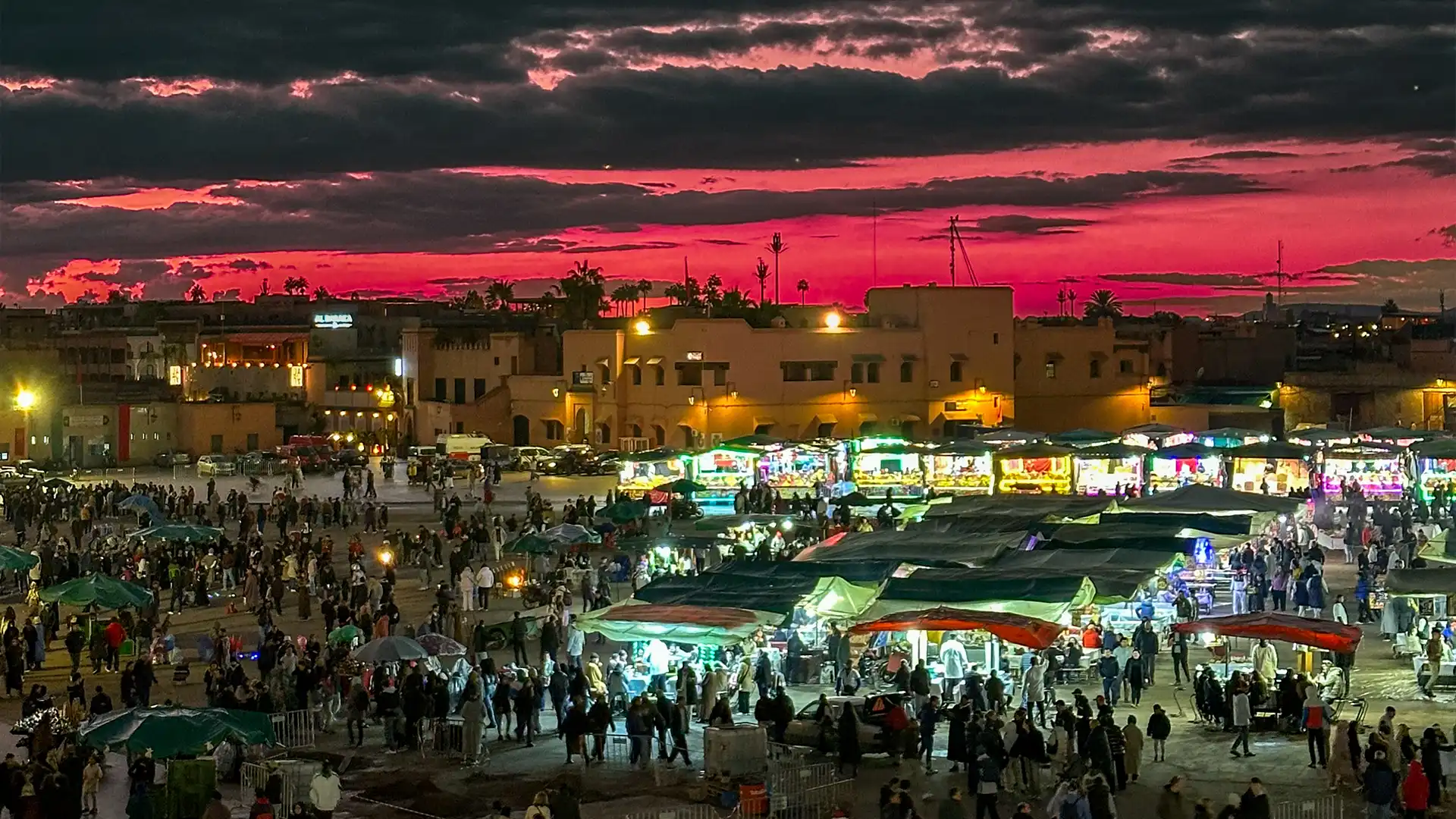
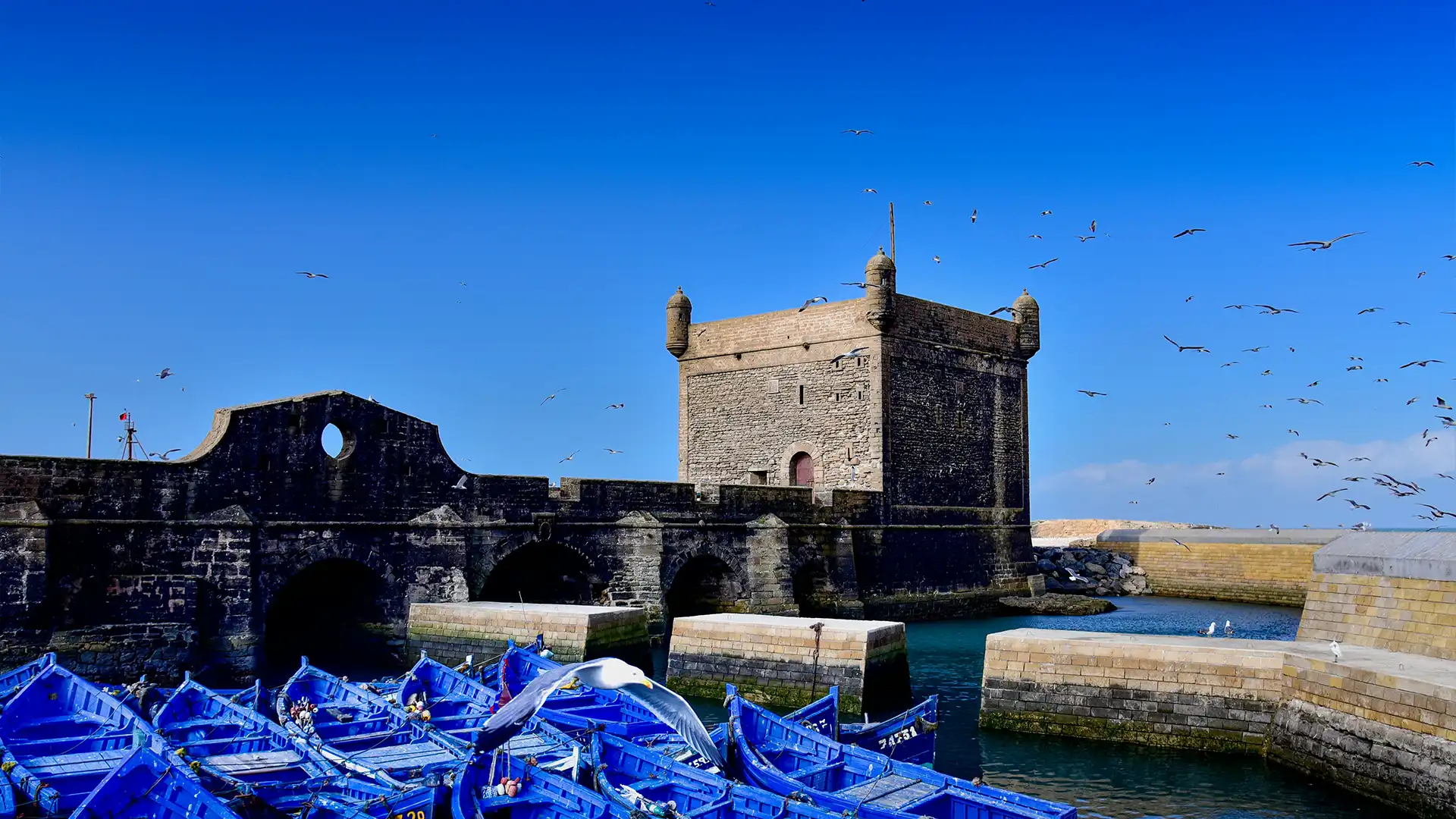
Where you are matters as much as the season. The medinas of Marrakesh and Fez are conservative and busy — cover shoulders and knees and keep valuables secure. Coastal towns like Essaouira and Agadir are more relaxed, and beachwear is fine on the beach itself.
The Sahara needs sun cover by day and warm layers for cold desert nights, plus closed shoes for the dunes. The Atlas Mountains and towns like Ifrane can be cold and even snowy in winter — pack like you would for a mountain trip. And to enter a mosque or religious site, cover shoulders, chest, and knees; some sites ask women to cover their hair, which is where that scarf pays off again.
A simple packing list
You do not need a new wardrobe — just the right mix. A practical Morocco capsule looks like this:
Loose trousers and long skirts or dresses; a few breathable tops that cover the shoulders; one warm layer (fleece or jacket) for nights and mountains; a scarf; comfortable closed walking shoes for uneven medina lanes and dunes; sandals for the coast; a sun hat and sunglasses; and modest swimwear for hotels and beaches. Natural fabrics like cotton and linen throughout will serve you better than synthetics in the heat.
What not to pack
A few things take up space and rarely earn it. Very short shorts and revealing tops draw attention you do not want in the cities. Heavy heels are punished by cobbled, uneven medina streets. Bulky coats are overkill outside deep winter or high altitude — layers travel better.
And leave the "as little as possible" summer mindset at home: in Morocco's heat, light clothes that cover you actually keep you cooler and more comfortable than bare skin under the sun.
Frequently asked questions
No. Visitors are not expected to cover their hair in daily life. A headscarf is only needed to enter some mosques or religious sites, so carrying a light scarf is useful but not required elsewhere.
Yes, particularly in coastal and tourist areas. In the medinas of Fez and Marrakesh, shorts read as beachwear; long trousers or knee-length options are more comfortable and draw less attention.
Loose, covering clothes and sun protection by day, warm layers for cold nights, and closed shoes for the dunes. A scarf helps against sun, wind, and blown sand.
Days are usually mild, but nights get genuinely cold, and the Atlas Mountains can see snow. Pack warm layers and a proper jacket if you travel between December and February.
Cover shoulders, chest, and knees. Some sites also ask women to cover their hair. Most working mosques are closed to non-Muslims, with a few exceptions such as the Hassan II Mosque in Casablanca.